Tesla's Grand Bet: A Cybercab Designed to Operate Without Human Control
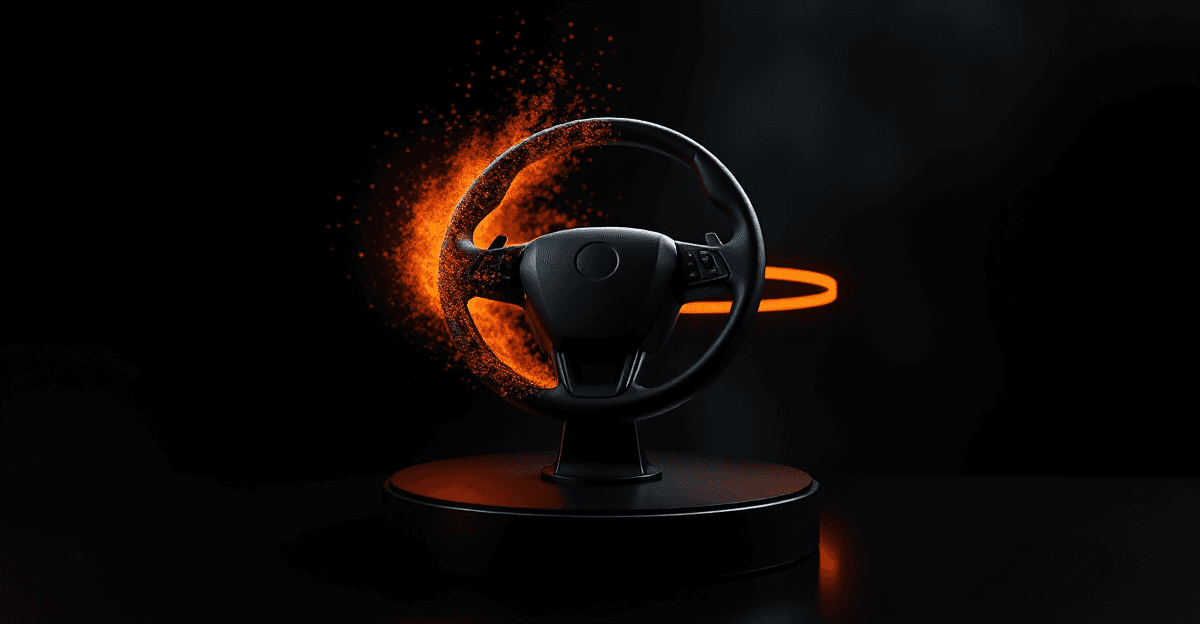
When Tesla unveiled the Cybercab, the most striking detail wasn't the angular design or the gull-wing doors. It was the absence of something: a steering wheel. No pedals, no manual override, no fallback position for a nervous passenger. The Tesla Cybercab autonomous AI isn't just an engineering choice — it's a philosophical declaration. AI is no longer the co-pilot. AI is the pilot.
This distinction matters enormously, both for autonomous vehicles and for the broader enterprise technology landscape. A co-pilot AI assists, suggests, and defers to human judgment when uncertainty arises. A pilot AI owns the outcome entirely. The confidence threshold required to remove that steering wheel — to eliminate the physical manifestation of human override — represents a standard of reliability that most AI systems deployed in enterprise environments today cannot yet meet. Tesla's bet is that they've crossed that threshold. Whether they're right will play out on the streets of Austin. But the question they're forcing every technology leader to confront is: what would it take for your organization to make the same bet?
The parallel to enterprise AI adoption is direct and urgent. Organizations across industries are moving from AI-assisted workflows — where humans review AI recommendations before acting — toward AI-owned processes, where the model executes autonomously. Fraud detection systems that automatically block transactions. Supply chain algorithms that reroute shipments without human approval. Customer service agents that resolve tickets end-to-end without escalation. Each step along that spectrum raises the stakes for reliability, governance, and what happens when the system fails. Tesla removed the steering wheel. The enterprise equivalent is removing the approval queue.
Beyond Cybercab Itself: Tesla's Ambitions Beyond a Single Vehicle
It would be a strategic mistake to evaluate the Cybercab purely as a car. Tesla's ambitions beyond Cybercab itself encompass a full autonomous ride-hailing network, AI-powered logistics, and a robotaxi fleet that transforms the vehicle into a revenue-generating node in a larger AI ecosystem. The car is the hardware layer. The real product — the durable competitive moat — is the AI inference engine running underneath it, accumulating billions of miles of real-world training data with every trip.
This is a model that enterprise SaaS leaders should recognize immediately. The most defensible AI platforms are not defined by their user interface or even their feature set. They're defined by the proprietary data flywheel that makes the underlying model smarter over time. Every Cybercab ride improves Tesla's FSD model. Every customer interaction processed through an enterprise AI platform should be improving that organization's models too. The question is whether your AI architecture is designed to capture and leverage that feedback loop — or whether you're running static models that degrade in relevance as your business evolves.
For organizations evaluating their own AI strategies, the lesson from Tesla's ecosystem ambitions is clear: a single proof of concept or isolated automation initiative is not an AI strategy. It's an experiment. A genuine AI strategy connects use cases, shares data infrastructure, and builds toward a scalable, interconnected system where the whole is worth more than the sum of its parts. Our AI consulting services are specifically designed to help enterprises move from fragmented AI experiments toward coherent, production-ready architectures that compound in value over time.
Austin Production Line Realities: From POC to Begin Mass Production
Tesla's Austin production line is slated to begin mass production of the Cybercab in 2026. That timeline — years after the initial prototype reveal — illuminates one of the most underappreciated challenges in both automotive manufacturing and enterprise AI: the brutal gap between a working prototype and scalable deployment. The prototype proves the concept. The production line proves the business.
This gap is painfully familiar to enterprise technology leaders. Across industries, organizations have invested heavily in AI proofs of concept that demonstrated genuine promise in controlled environments, only to stall before reaching production-grade scale. The model performed beautifully on clean, curated data. It collapsed when exposed to the messiness of real operational data. Latency was acceptable with ten concurrent users. It became unacceptable with ten thousand. The team that built the POC lacked the MLOps expertise to operationalize it. Sound familiar? This is what RevolutionAI calls the "no-code rescue" moment — and it's more common than most organizations publicly admit. If your team is stuck at this inflection point, our POC development and rescue services are built exactly for this transition.
The lessons from Tesla's Austin production ramp are directly transferable. Scaling autonomous systems — whether vehicles or AI models — requires investing in infrastructure before you need it, not after you've already hit the wall. For enterprise AI, that means building robust MLOps pipelines, establishing data governance and quality frameworks, implementing AI security controls, and designing for observability from day one. Organizations that treat these as afterthoughts during the POC phase pay an exponential cost when they attempt to scale. Tesla spent years and billions building the manufacturing infrastructure to support Cybercab production. Your AI production infrastructure deserves the same level of intentional investment.
Could Cost Less Than $30K: AI Democratization and the Accessibility Imperative
One of the most strategically significant details about the Cybercab is its projected price point. At potentially under $30,000, Tesla is deliberately positioning autonomous AI not as a luxury technology for early adopters but as a mass-market product. This pricing strategy signals a maturation inflection point: the technology has become reliable enough and manufacturable enough to compete on mainstream economics.
The same democratization dynamic is reshaping enterprise AI at an accelerating pace. No-code and low-code AI platforms are collapsing the barrier to entry for businesses that previously lacked the data science talent or capital to build AI capabilities. Three years ago, deploying a sophisticated NLP model required a team of ML engineers, months of development time, and significant cloud infrastructure investment. Today, comparable capabilities are accessible through API calls and visual workflow builders. The expertise gap is narrowing. The cost curve is bending downward. And organizations that assumed their complexity or scale would insulate them from AI disruption are discovering that assumption was wrong.
RevolutionAI's no-code rescue and managed AI services are designed around this exact reality. Powerful AI capabilities should not require a team of PhDs to deploy or maintain. When organizations find themselves locked into expensive custom builds that only a handful of specialists understand, or when promising AI initiatives stall because the internal team lacks the operationalization expertise, that's precisely where managed services create disproportionate value. The Cybercab's sub-$30K price target is Tesla's commitment to accessibility. RevolutionAI's managed services model is the enterprise equivalent — sophisticated AI infrastructure without the prohibitive overhead of building and maintaining it entirely in-house.
Ride-Hailing Disruption: What Autonomous AI Means for Platform Economies
Tesla's entry into ride-hailing with a driverless fleet is not merely a competitive threat to Uber and Lyft. It's a structural challenge to their entire business model. The human driver represents both the highest variable cost in the ride-hailing equation and the primary reason the unit economics of these platforms have remained stubbornly unfavorable for over a decade. Remove the driver through AI automation, and the cost structure transforms entirely. Tesla isn't competing with Uber on driver incentives or surge pricing algorithms. It's competing by eliminating the cost category that makes the traditional model fundamentally difficult to scale profitably.
This is precisely the dynamic now facing knowledge work across industries. AI agents are beginning to remove human intermediaries from repetitive cognitive tasks — document review, data extraction, report generation, customer query resolution, compliance monitoring. The platforms and business models built around human labor performing these tasks at scale are facing the same structural pressure that ride-hailing faces from autonomous vehicles. The question is not whether this disruption will occur, but how quickly and which organizations are positioned on the right side of it.
For enterprises building AI capabilities on third-party platforms, the ride-hailing parallel carries an important risk management lesson. Uber and Lyft built platform empires on top of a cost structure they didn't control — human drivers who could demand higher rates, organize, or simply log off during peak demand. Enterprises that build critical AI workflows entirely on top of third-party foundation models face analogous dependency risks: pricing changes, capability deprecations, or rate limits that can disrupt operations they've come to rely on. Auditing your AI dependency risk and exploring hybrid architectures — proprietary fine-tuned models combined with managed infrastructure — is a strategic conversation worth having before you're forced into it.
AI Security and the Risks of Removing the Human in the Loop
A car without a steering wheel has no manual override. There is no moment where a nervous passenger can grab the wheel and course-correct. Every failure mode — sensor occlusion, adversarial road markings, edge-case pedestrian behavior, software exploits — must be anticipated and mitigated entirely in software. This makes AI security not a nice-to-have feature but an existential requirement for the system to function at all.
The enterprise AI parallel is equally stark. As organizations remove human checkpoints from AI-driven processes, the blast radius of model errors, adversarial inputs, and data drift expands dramatically. A fraud detection model operating with human review can be corrected when it makes a bad call. A fraud detection model operating autonomously at scale can block thousands of legitimate transactions — or approve thousands of fraudulent ones — before anyone notices the pattern has shifted. The absence of human oversight doesn't make AI systems more efficient in isolation; it makes the consequences of failure more severe and the detection window longer. This is precisely the risk landscape our AI security solutions are purpose-built to address, from adversarial robustness testing to continuous model monitoring and drift detection.
Regulatory and compliance scrutiny is already intensifying around autonomous AI systems. Prediction markets and safety researchers have raised pointed questions about Tesla's validation methodology for FSD — specifically whether real-world deployment is functioning as a de facto testing environment at public expense. Enterprise AI leaders should treat this regulatory preview seriously. The EU AI Act, emerging SEC guidance on AI in financial services, and sector-specific compliance frameworks are all moving in the same direction: demanding documented evidence of safety validation, bias testing, and ongoing monitoring for high-stakes autonomous AI systems. Organizations that build governance frameworks proactively will find compliance far less disruptive than those scrambling to retrofit controls after regulators arrive.
What Tesla's Autonomous Roadmap Teaches Enterprise AI Strategy
Tesla's journey from Autopilot — a driver assistance system that required constant human supervision — to Full Self-Driving to a Cybercab without any driver input whatsoever is not a single leap. It's a carefully sequenced maturity curve spanning nearly a decade of incremental capability development, data accumulation, and public trust building. Each phase expanded AI autonomy while maintaining enough human oversight to catch and learn from failures before advancing further.
This phased approach is the correct model for enterprise AI transformation, and yet it's the approach most organizations fail to plan for explicitly. AI initiatives tend to be evaluated as binary — either the AI does the task or a human does. The more productive framing is a spectrum: from AI providing recommendations that humans always review, to AI acting autonomously within defined parameters with human audit, to AI owning entire process domains with exception-based human oversight only. Mapping your organization's AI initiatives explicitly on this human-in-the-loop spectrum — and making deliberate, evidence-based decisions about when processes are ready to advance — is one of the highest-leverage strategic exercises a technology leader can undertake right now.
The actionable framework is straightforward, even if the execution is demanding. Start by inventorying your current AI initiatives and classifying each by its current autonomy level and its target autonomy level. Identify the specific reliability, security, and governance criteria that must be met before advancing each initiative to greater autonomy. Build the infrastructure — MLOps pipelines, monitoring systems, security controls, audit trails — that makes that advancement responsible rather than reckless. RevolutionAI's AI consulting services and HPC hardware design capabilities are specifically structured to help enterprises architect the compute infrastructure and governance frameworks needed to advance responsibly along that autonomy curve, without outpacing their own risk management maturity.
Conclusion: The Steering Wheel Was Never Just About Driving
Tesla's decision to build a car without a steering wheel is, at its core, a statement about trust. Trust in the AI system's reliability. Trust in the safety validation process. Trust that the infrastructure supporting the system — from sensors to software to network connectivity — is robust enough to carry the full weight of the decision-making responsibility that humans once held.
Enterprise AI is approaching its own steering wheel moment. Not all at once, and not uniformly across every process or industry. But the trajectory is clear. The organizations that will lead in this environment are not necessarily those with the most sophisticated models. They're the ones that build the governance, security, and infrastructure foundations that make expanding AI autonomy responsible — and that approach the maturity curve with the same disciplined, phased intentionality that Tesla applied to its autonomous driving roadmap.
The Cybercab is a vehicle. But the real lesson it carries is about what it takes to trust a machine with decisions that matter. That lesson belongs to every enterprise technology leader navigating the AI transformation ahead.
Ready to assess where your organization sits on the AI autonomy spectrum and what it will take to advance responsibly? Explore RevolutionAI's managed AI services, AI security solutions, and consulting engagements — or visit our pricing page to find the right engagement model for your organization.
Frequently Asked Questions
What is the Tesla Cybercab and how is it different from other electric vehicles?
The Tesla Cybercab is a fully autonomous robotaxi designed to operate without a steering wheel, pedals, or any manual override controls. Unlike conventional electric vehicles or even semi-autonomous cars, it places complete control in the hands of Tesla's Full Self-Driving AI, making it a true driverless vehicle rather than a driver-assisted one. This makes it one of the most ambitious bets in the autonomous vehicle industry to date.
When will Tesla begin mass production of the Cybercab?
Tesla's Austin production line is slated to begin mass production of the Cybercab in 2026, several years after the vehicle's initial prototype reveal. This extended timeline reflects the significant engineering, regulatory, and safety validation challenges involved in bringing a fully autonomous vehicle to commercial scale. Early robotaxi deployments are expected to begin in Austin before full mass production ramps up.
Why did Tesla remove the steering wheel from the Cybercab?
Tesla removed the steering wheel from the Cybercab as a deliberate declaration that its AI system has reached a reliability threshold sufficient to own driving outcomes entirely, without any human fallback. This design choice signals a philosophical shift from AI as a co-pilot to AI as the sole pilot responsible for passenger safety. It is one of the most consequential and controversial decisions in the company's autonomous vehicle strategy.
How does Tesla's autonomous vehicle strategy create a competitive advantage?
Tesla's competitive moat is built on a proprietary data flywheel, where every mile driven by its fleet feeds real-world training data back into its Full Self-Driving AI model. This means the system continuously improves over time, making it increasingly difficult for competitors without comparable fleet scale to match Tesla's model performance. The Cybercab is designed to accelerate this data accumulation by operating as a revenue-generating node within a broader autonomous ride-hailing network.
Is the Tesla Cybercab safe without a steering wheel or manual controls?
Tesla's position is that removing manual controls is only justified when the AI system meets an exceptionally high reliability standard, and the company believes its Full Self-Driving technology has crossed that threshold. However, real-world validation is still ongoing, with initial deployments in Austin serving as a critical proving ground for the technology. Regulatory approval and public trust will ultimately determine how quickly the Cybercab can scale beyond early markets.
How does the Tesla Cybercab relate to broader AI automation trends in business?
The Cybercab represents the same shift happening across enterprise technology, where AI moves from assisting human decisions to fully owning process outcomes without human approval steps. Just as Tesla removed the steering wheel, businesses are removing approval queues in areas like fraud detection, supply chain management, and customer service automation. This transition raises the stakes significantly for AI reliability, governance, and failure management in any organization adopting autonomous AI workflows.