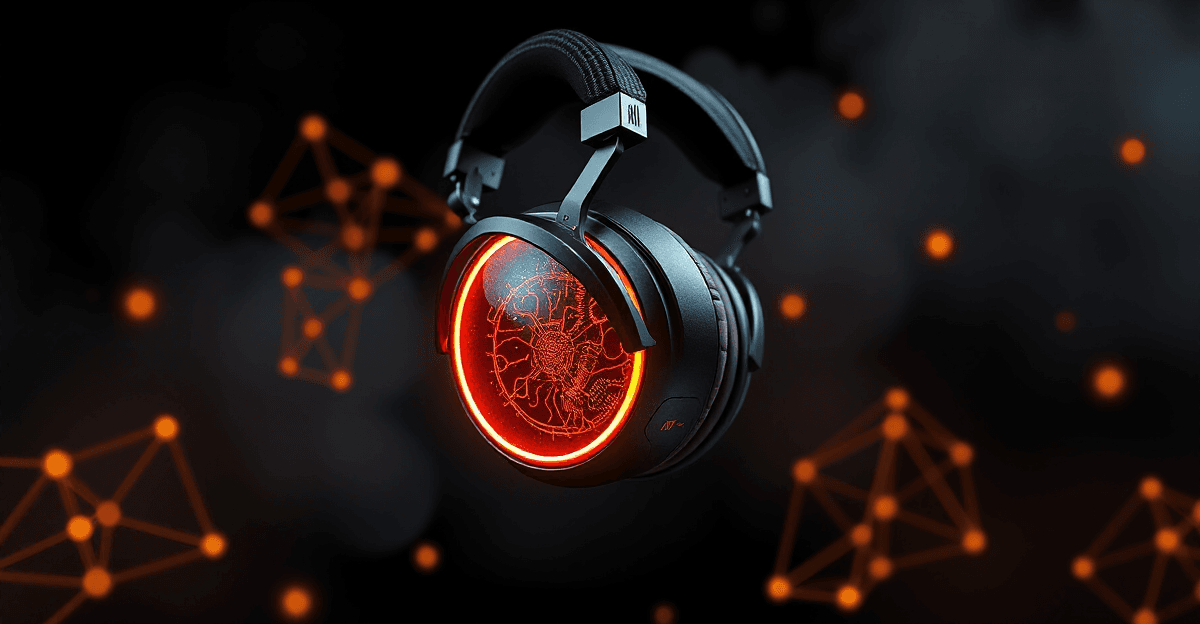
Apple Today Unveiled AirPods Max 2: What You Need to Know
When Apple announces a new hardware product, the technology industry pays attention — not just because of the product itself, but because of what it signals about where Apple is placing its strategic bets. The AirPods Max 2 announcement is no exception. Unveiled as part of a broader hardware refresh, the second-generation AirPods Max represent Apple's most aggressive move yet to embed artificial intelligence directly into everyday wearable devices, transforming what was once a premium audio accessory into a sophisticated edge AI platform.
The headline upgrades — next-generation active noise cancellation, Live Translation support, and deep iOS 27 integration — are impressive on their own terms. But the more consequential story is architectural. Apple introduced AirPods Max 2 not merely as headphones with upgrades, but as a statement about where AI inference is heading: away from the cloud, onto the device, and into the physical world. For enterprise technology leaders, CTOs, and AI architects watching this space, the AirPods Max 2 launch is a live case study in edge AI design that carries direct implications for enterprise strategy.
Understanding what Apple introduced with AirPods Max 2 — and why it matters beyond the consumer audio market — sets the stage for a larger conversation about how AI is migrating to the edge, what that migration demands technically, and how organizations can apply these same principles to their own AI transformation roadmaps.
Active Noise Cancellation Meets On-Device AI: The Technical Leap
The improved active noise cancellation in AirPods Max 2 is not simply a better version of the same technology. It is powered by a new Apple silicon chip running real-time acoustic machine learning models entirely on the device. There is no round-trip to a server, no cloud latency, no dependency on network connectivity. The chip continuously samples environmental audio, classifies noise profiles across dozens of acoustic categories, and applies counter-signal adjustments in microseconds — all within the physical constraints of a pair of headphones.
This is edge AI inference in its most consumer-visible form, and it is technically remarkable. The ANC system must process audio signals at frequencies exceeding 20,000 Hz, run classification models fast enough to respond before the human ear perceives the noise, and do all of this on a chip consuming milliwatts of power. Achieving this requires not just capable silicon, but meticulously optimized neural network architectures, hardware-aware model training, and tight co-design between the chip team and the software team. The result is a latency profile measured in microseconds — a benchmark that cloud-based inference cannot physically match regardless of network speed.
For enterprise AI teams, this is more than an interesting engineering footnote. It illustrates why HPC hardware design and on-device inference are becoming critical investment areas for organizations running latency-sensitive AI workloads. Whether the use case is real-time anomaly detection on a factory floor, AI-assisted triage in a clinical setting, or computer vision for physical security, the same fundamental constraint applies: some AI tasks cannot tolerate the round-trip latency of cloud infrastructure. RevolutionAI's HPC hardware design and AI consulting services are specifically built to help organizations architect low-latency AI pipelines for exactly these kinds of industrial, healthcare, and security applications — applying the same principles Apple has demonstrated in a consumer device to enterprise-grade deployments.
Adaptive Audio and Conversation Awareness: AI That Reads Context
One of the most technically sophisticated features in AirPods Max 2 is the adaptive audio conversation mode. Rather than requiring users to manually switch between noise cancellation and transparency modes, the system does it automatically — using sensor fusion across microphones, accelerometers, and voice activity detection to classify the user's situational context in real time. If you start speaking, the headphones recognize it. If you turn your head toward another person, the system responds. The transition happens seamlessly, without a tap or a command.
This is applied multimodal AI. The system is not running a single model on a single data stream; it is fusing signals from multiple sensor types, classifying behavioral and environmental context simultaneously, and making autonomous adjustment decisions — all without user input. The pattern here is directly analogous to what enterprise AI architects call agentic systems: AI that senses operational context and takes rules-based autonomous action rather than waiting for human instruction. The difference is that Apple has shipped this capability in a consumer wearable at scale, proving that the architecture is not just theoretically sound but practically deployable.
For enterprises building automation systems, smart operations platforms, or AI-assisted workflows, adaptive audio conversation awareness offers a compelling design template. The lesson is not to copy Apple's specific implementation, but to internalize the architectural principle: intelligent systems should sense context and adapt behavior autonomously, reducing the cognitive load on human operators. This is precisely the approach RevolutionAI applies when building agentic AI systems for clients across logistics, manufacturing, and financial services — systems that monitor operational signals, classify situational states, and trigger appropriate responses without requiring a human to initiate every action. If your organization is still designing AI systems that require constant manual input to function, the AirPods Max 2 adaptive audio architecture is a useful benchmark for what the baseline expectation is becoming.
Live Translation Support: On-Device NLP Arrives in Your Ears
Perhaps the most striking capability in the AirPods Max 2 feature set is Live Translation via iOS 27. The system enables real-time multilingual conversation without an internet connection — spoken words in one language are translated and delivered in another, locally, on a chip small enough to fit inside a headphone housing. For anyone who has tracked the evolution of natural language processing over the past decade, this represents a genuine landmark. Running a capable translation model offline, in real time, on a power-constrained wearable chip is not something that was considered practically achievable until very recently.
The technical pathway that makes this possible is model compression and quantization. Large language models and NLP systems are, by default, computationally expensive — they require significant memory bandwidth and floating-point operations to run. Making them viable on edge hardware requires aggressive techniques: quantizing model weights from 32-bit to 4-bit or 8-bit representations, pruning redundant parameters, distilling large models into smaller student models that preserve most of the accuracy at a fraction of the compute cost. Apple has clearly invested heavily in these techniques, and the result — a translation model running on a wearable chip — validates that the efficiency frontier for on-device NLP has moved dramatically.
For organizations exploring AI-powered communication tools, multilingual customer service systems, or privacy-sensitive NLP applications, this is a significant signal. The same model compression and quantization techniques enabling Live Translation on AirPods Max 2 can be applied to reduce inference costs in enterprise AI deployments, eliminate cloud dependency for sensitive workloads, and dramatically shrink the hardware footprint required to run capable language models. RevolutionAI's AI security solutions and managed services teams help enterprises evaluate exactly these architectural decisions — determining when edge NLP deployment is the right choice versus cloud-hosted inference, and ensuring that whatever approach is selected meets the organization's data privacy, latency, and cost requirements.
10 New Features in iOS 27 That Amplify AirPods Max 2 AI Capabilities
The AirPods Max 2 hardware does not operate in isolation. iOS 27 introduces a suite of capabilities that deepen the integration between Apple's operating system and its wearable hardware — and the 10 new features most relevant to AirPods Max 2 users illustrate a deliberate platform AI strategy. Personalized spatial audio calibration uses on-device machine learning to map the acoustic geometry of an individual user's ears and adjust the audio field accordingly. Health sensing APIs open new pathways for third-party developers to build applications that leverage biometric data from the headphones. Enhanced on-device Siri reasoning reduces dependence on cloud processing for conversational AI tasks, making interactions faster and more private.
What is notable about this feature set is not any individual capability but the coherence of the overall system. Apple is not shipping isolated AI features; it is building an interconnected AI layer that spans hardware silicon, operating system services, and developer APIs. The AirPods Max 2 chip provides the inference compute. iOS 27 provides the software framework and data pipelines. The developer ecosystem provides the application layer. Each component is co-designed to interoperate, and the result is an AI platform that compounds in value as more components are added — a flywheel effect that isolated features cannot replicate.
Enterprise technology leaders building digital transformation roadmaps should study this platform approach carefully. The most common failure mode in enterprise AI programs is not a lack of ambition but a lack of architectural coherence — AI models bolted onto legacy systems, data pipelines that were not designed to feed the models that depend on them, hardware procured without reference to the inference workloads it needs to run. The iOS 27 and AirPods Max 2 integration is a consumer-scale demonstration of what happens when AI components are co-designed rather than assembled after the fact. This is exactly the methodology RevolutionAI applies through its POC development practice: ensuring that AI systems are architected from the ground up to integrate, scale, and evolve as a unified platform rather than a collection of disconnected capabilities.
What AirPods Max 2 Reveals About the Future of AI Hardware Strategy
The AirPods Max 2 release carries a strategic signal that extends well beyond the audio market: the AI battleground has shifted from cloud services to silicon. The cloud hyperscalers — AWS, Azure, Google Cloud — built their competitive moats on the assumption that AI inference would live in their data centers. Apple's trajectory suggests a different future, one where the most consequential AI compute happens on the device in your pocket, on your wrist, or in your ears. Whoever controls the chip controls the AI experience, and Apple has been investing in custom silicon for more than a decade in preparation for exactly this moment.
For enterprise technology leaders, this trend demands a re-evaluation of hardware procurement and custom silicon strategy. Organizations that have built their AI infrastructure entirely on cloud inference APIs are exposed to a set of risks that are becoming increasingly visible: latency constraints for real-time applications, data sovereignty concerns for regulated industries, cost structures that scale unfavorably with usage volume, and dependency on third-party infrastructure for mission-critical workloads. The convergence of ANC, adaptive audio, and on-device NLP in a single consumer device illustrates how capable AI can be when it is purpose-built into hardware rather than accessed remotely — and that model is one enterprises in manufacturing, logistics, healthcare, and security should be actively evaluating.
The practical implication is not that every enterprise needs to design its own chips — that is Apple's path, and it is not universally applicable. But it does mean that hardware selection for AI deployments deserves the same rigor as model selection and data pipeline design. Choosing the right inference hardware — whether that is a GPU cluster, an NPU-equipped edge device, or a custom FPGA accelerator — is a foundational decision that shapes everything downstream. RevolutionAI's AI consulting services and HPC hardware design practice are built to help organizations navigate exactly this decision, from evaluating inference hardware options to designing custom AI accelerator pipelines optimized for specific workload profiles.
Actionable Insights: Applying Apple's AI Wearable Lessons to Your Enterprise AI Strategy
The AirPods Max 2 launch offers enterprise AI leaders a practical framework for evaluating and evolving their own AI architectures. The first step is an honest audit of your current AI infrastructure for edge readiness. Which workloads in your environment require real-time, low-latency inference? Which involve sensitive data that should not transit a public cloud? Which are currently cloud-dependent but would benefit operationally from on-premise or on-device deployment? These questions do not have universal answers, but they are the right questions to be asking — and the AirPods Max 2 architecture provides a useful reference point for what is technically achievable at the edge today.
The second priority is building or acquiring model compression and quantization expertise. This is no longer an esoteric research discipline; it is a practical engineering capability that has direct impact on inference cost, latency, and hardware footprint across enterprise AI deployments. The techniques that enable Live Translation on a wearable chip — quantization, pruning, knowledge distillation — are equally applicable to reducing the cost of running large language models in enterprise environments, shrinking the hardware requirements for edge vision systems, and accelerating inference for real-time decision-support applications. Organizations that develop this capability internally or partner with firms that have it will have a meaningful cost and performance advantage over those that continue to run unoptimized models on oversized infrastructure.
Third, adopt a platform mindset in your AI architecture. The most important lesson from the AirPods Max 2 and iOS 27 integration is not about any specific feature — it is about the compounding value of co-designed systems. If your AI strategy consists of a model here, a pipeline there, and a dashboard bolted on top, you are not building a platform; you are building technical debt. Designing AI systems where hardware, software, and data pipelines are co-optimized from the start is harder upfront but dramatically more valuable at scale. Finally, monitor consumer AI hardware releases as leading indicators of enterprise infrastructure expectations. Features debuting in devices like AirPods Max 2 today — on-device NLP, multimodal sensor fusion, autonomous context adaptation — will become baseline enterprise requirements within 18 to 36 months. Organizations that begin building toward these capabilities now will be positioned to execute when the market demands them; those that wait will be scrambling to catch up.
If you are ready to evaluate your organization's edge AI readiness or explore how these architectural principles apply to your specific use cases, RevolutionAI's team of AI architects and consultants is available to help. Explore our managed AI services or reach out to discuss a structured POC that validates edge AI feasibility before you commit to full-scale infrastructure investment.
Conclusion: The Wearable Is the Warning Shot
AirPods Max 2 will be reviewed as premium headphones with better noise cancellation and a useful translation feature. That framing is accurate but incomplete. What Apple has actually shipped is a proof of concept for the future of AI infrastructure — one where intelligence is distributed, latency is measured in microseconds, privacy is preserved by design, and the platform compounds in value because every component was built to work with every other component.
The implications for enterprise AI strategy are not subtle. The same architectural principles that make AirPods Max 2 technically remarkable — edge inference, model compression, multimodal sensor fusion, platform co-design — are the principles that will define competitive advantage in enterprise AI over the next decade. Organizations that internalize these lessons now, invest in the right capabilities, and build AI systems with the coherence and intentionality that Apple brings to its hardware will be the ones setting the pace. Those that treat AI as a feature to be added rather than a platform to be built will find themselves perpetually reactive.
The wearable is the warning shot. The question for enterprise technology leaders is whether they are listening.
Frequently Asked Questions
What is new in AirPods Max 2 compared to the original?
AirPods Max 2 features a next-generation Apple silicon chip powering significantly improved active noise cancellation, Live Translation support, and deep iOS 27 integration. The second-generation model shifts from a premium audio accessory to an edge AI platform, with on-device machine learning models that process audio in real time without relying on cloud connectivity. These upgrades represent a fundamental architectural change, not just incremental hardware improvements.
How does AirPods Max 2 active noise cancellation work?
AirPods Max 2 uses a new Apple silicon chip to run real-time acoustic machine learning models entirely on the device, with no cloud round-trip required. The system continuously samples environmental audio, classifies noise profiles across dozens of acoustic categories, and applies counter-signal adjustments in microseconds. This on-device approach delivers latency measured in microseconds, a benchmark that cloud-based inference cannot match regardless of network speed.
Why should I upgrade to AirPods Max 2?
If you use your headphones in noisy environments, for multilingual conversations, or deeply within the Apple ecosystem, AirPods Max 2 offers meaningful real-world improvements over the original. The addition of Live Translation and adaptive audio conversation awareness addresses practical daily use cases that the first generation could not handle. For users on iOS 27, the deeper software integration further enhances the overall experience.
When were AirPods Max 2 announced and released?
Apple unveiled AirPods Max 2 as part of a broader hardware refresh, positioning them alongside updated iOS 27 software integration. The announcement confirmed availability aligned with the iOS 27 release cycle, though buyers should check Apple's official site for exact regional availability dates. The launch was notable for its emphasis on AI capabilities rather than traditional audio specifications alone.
Does AirPods Max 2 require an internet connection for its AI features?
No, the core AI features in AirPods Max 2, including active noise cancellation and adaptive audio, run entirely on-device using Apple's new silicon chip. This means the headphones do not depend on network connectivity or cloud servers to deliver real-time noise cancellation and context-aware audio adjustments. On-device processing also ensures these features work consistently in areas with poor or no internet access.
Is AirPods Max 2 worth the price for everyday users?
For users who prioritize best-in-class noise cancellation, seamless Apple device integration, and cutting-edge features like Live Translation, AirPods Max 2 offers a compelling premium value proposition. The shift to on-device AI processing means core features are faster and more reliable than competing cloud-dependent solutions. However, buyers who do not heavily use Apple devices or multilingual features may find the premium pricing harder to justify compared to alternatives.